
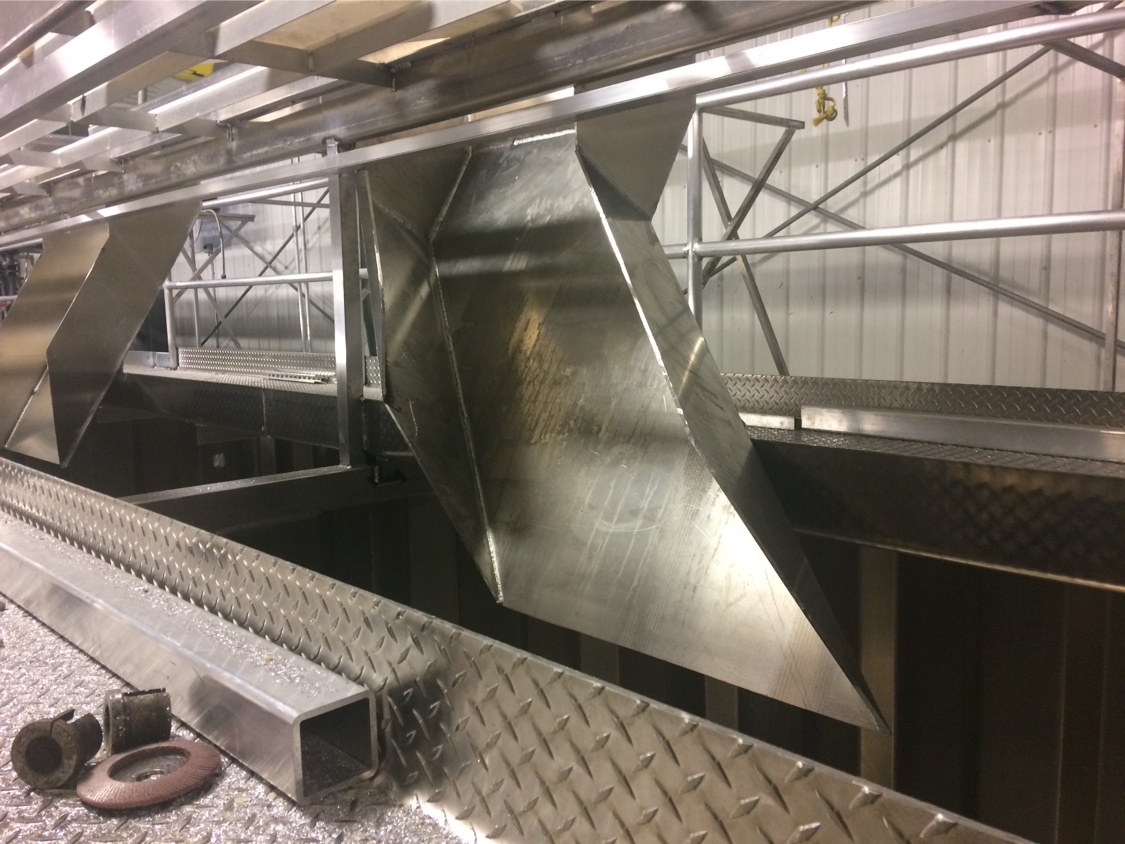
Transitions are where fish hangs up and lines lose money. These are designed so fish moves through — built right once, instead of paying forever.
A transition is every place fish passes from one belt, chute, or machine to the next. It is also where fish hangs up, bruises, and piles — and where a plant ends up paying a man to babysit the transition, every shift, all season.
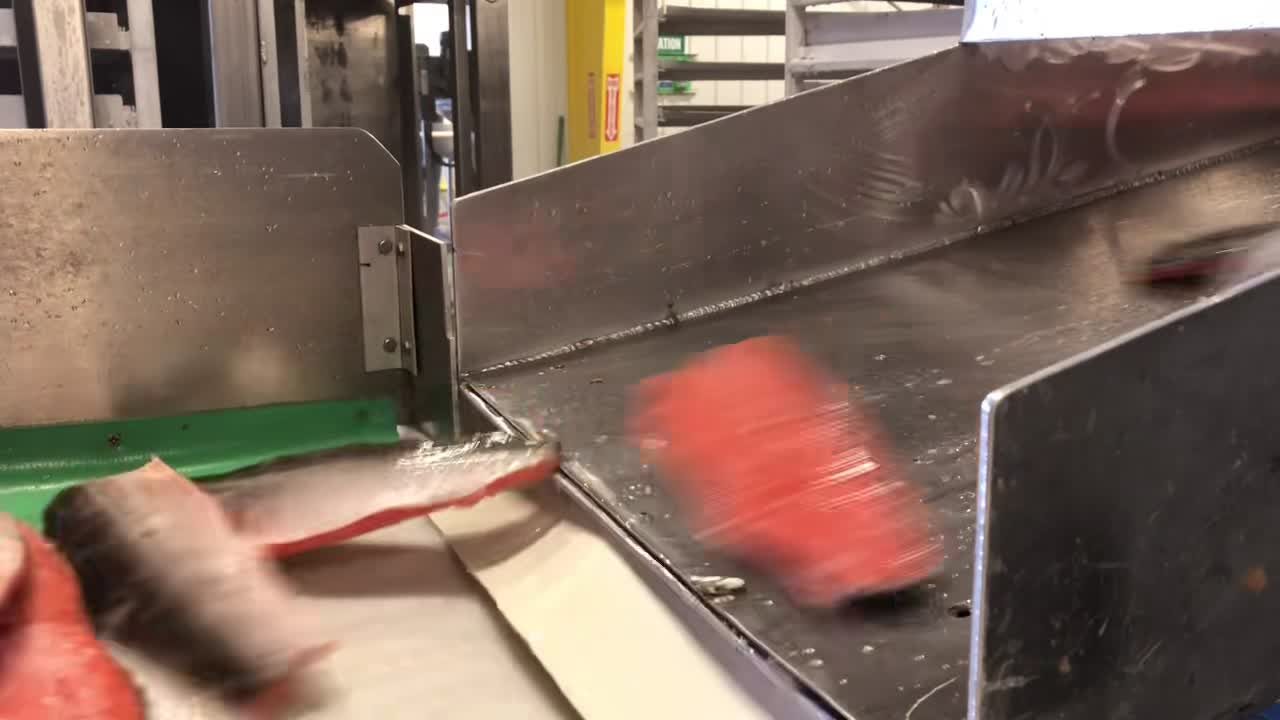
Heights, angles, and speeds are figured at the drawing stage, so the transition works on the first run and keeps working — no season of adjustments, no man assigned to a belt transition.
Built right once, instead of paying forever. That is why transitions get their own page.
Gravity is a free energy source, and lines are laid out to use it. Fish and water move on the fall wherever the fall can be arranged: fewer powered transfers, fewer motors to maintain, fewer hang-up points.
Gravity-fed grade and species separation lines run on the same principle — see the Conveyors page.
Smooth transitions are what crews notice first on these builds. If one transition in your plant eats crew hours every shift, that transition is a design problem — and it can be fixed.
A bad 90° transition gets a worker stationed at it, hand-moving fish — because the system doesn’t use gravity. That worker has a seasonal price.
And the cost repeats every season the transition stays unfixed. A gravity-fed transition is fixed once.
Fish that hangs up and piles up bruises, too. Smooth transitions keep product moving, and keep it whole.
Putting a line together, or fixing one that fights you?
Request a Quote