
No full-line shutdowns for a part swap. Cleaning the QCs can pass. Steel that isn't wasted.
Why a line built here runs different — all in one place.
Easy maintenance is designed in, not hoped for. When a part fails, you change the part — not the whole line. Production keeps moving while the swap happens.
The parts that wear are bolted, not welded. Swap them with hand tools: no cutting, no sparks, no pieces of metal in your product. In a food plant, that last point is food safety, not convenience.
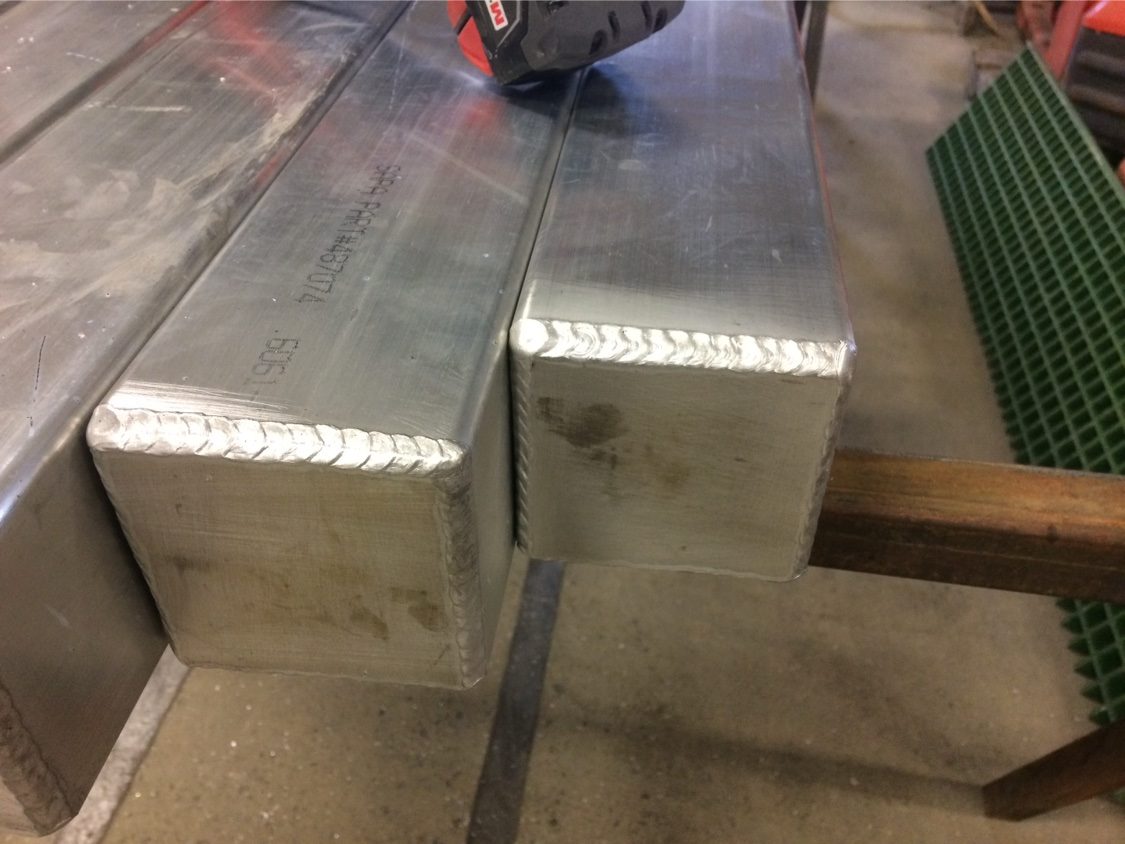
Equipment geared toward the QCs: built to clean fast and pass inspection, sanitation designed in instead of fought at every washdown. Open design — nothing for fish or bacteria to hide behind.
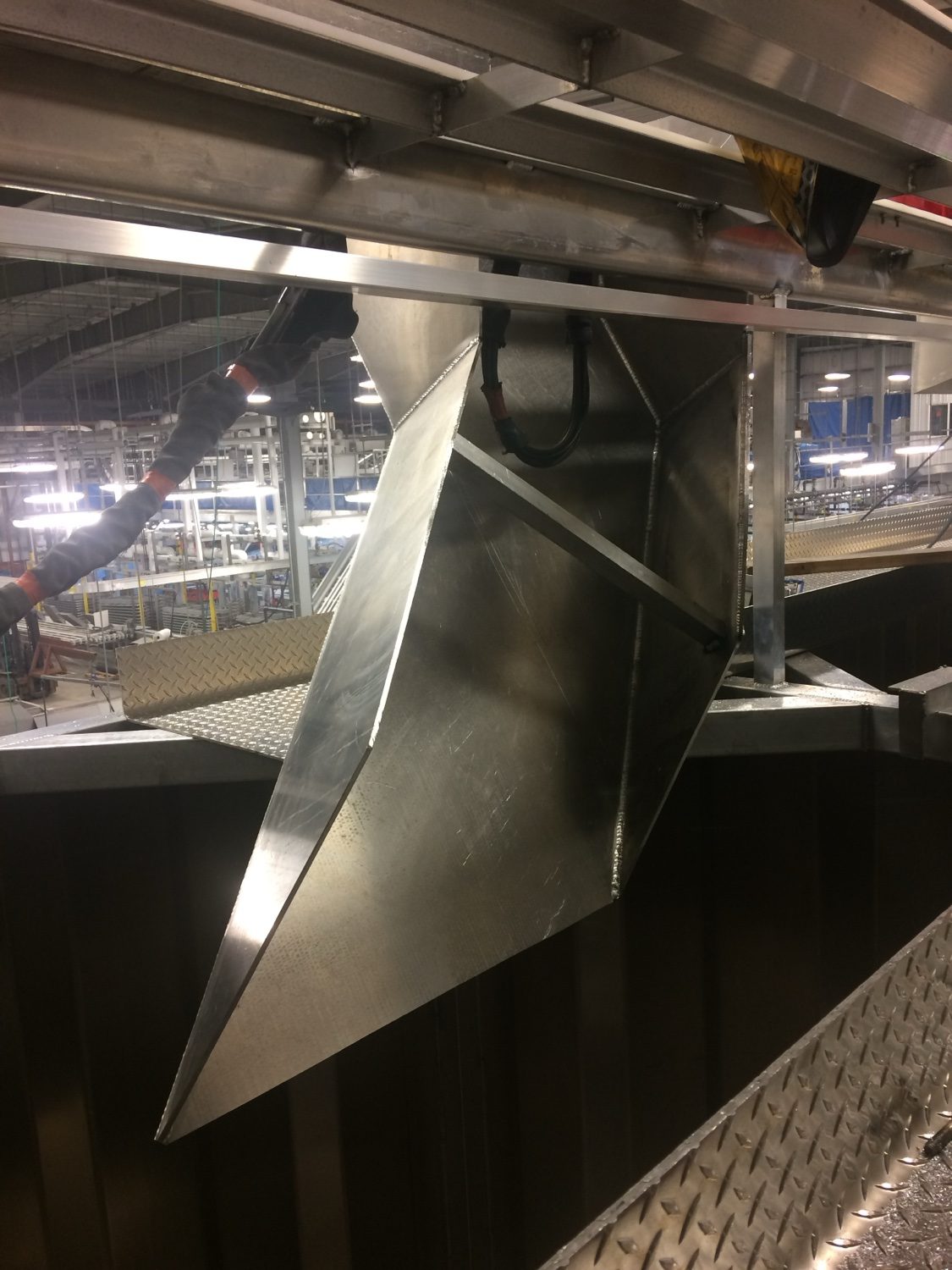
These designs use metal so efficiently it is night and day against typical fabrication. Less steel bought. Less weight on the building. Less cost. Same strength. That is one reason these conveyor designs replaced the ones before them at Silver Bay.
Transitions built right. Gravity doing the moving. Parts that swap with hand tools. Steel that is not wasted. Equipment designed by people who ran the lines — and who maintained the designs that came before.
Putting a line together, or fixing one that fights you?
Request a Quote